
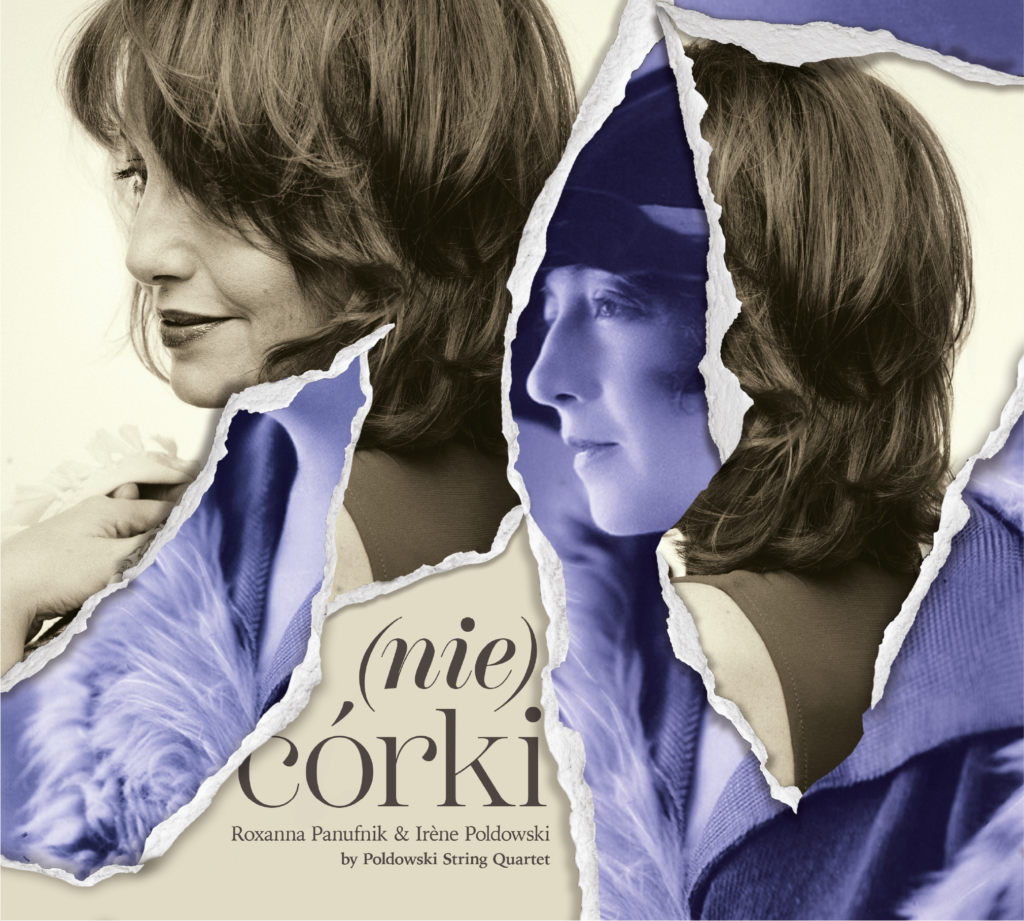
(NIE)CÓRKI – the first album by the Poldowski String Quartet featuring the Match Match Ensemble
Anagram has released the album (NIE)CÓRKI, featuring works by Irène Poldowski and Roxanna Panufnik.
Irène Poldowski (Regine Wieniawska) and Roxanna Panufnik – two women, two composers. But also the daughters of two legendary Polish composers. They share Polish roots and work in the United Kingdom. Why (NIE)CÓRKI? Because both have put a great deal of effort into NOT being perceived solely through the prism of their fathers’ work, but through their own musical language, style, expression and artistic personality.
(NIE)CÓRKI is an original project by the Poldowski String Quartet.
In collaboration with Wojciech Chałupka, the ensemble arranged Irène Poldowski’s songs for string quartet and quartet with voice and invited outstanding Polish artists to collaborate – mezzo-soprano Agata Schmidt, bassoonist Alicja Kieruzalska, and the female members of the Match Match Ensemble under the direction of Lilianna Krych.
The representation of women in the male-dominated world of composition is still too narrow, and Irène Poldowski and Roxanna Panufnik deserve to have their works freshly interpreted by outstanding artists and promoted in ever wider circles.
The album can be ordered by writing to poldowskiquartet@gmail.com and listened to on streaming platforms.
Performers:
Poldowski String Quartet:
Marta Piórkowska, Agata Myagmarsuren, Damian Kułakowski, Mateusz Błaszczak
Agata Schmidt mezzo-soprano
Alicja Kieruzalska bassoon
Match Match Ensemble:
Aleksandra Drogosz-Szymańska
Konstancja Molewska
Maria Złotek
Małgorzata Bartkowska
Marzena Lewandowska
Marta Schnura
Adrianna Żołnierczuk-Malec
Production:
Antoni Grzymała, Agnieszka Szczepańczyk – sound engineering, editing
Laura Chojnacka – graphics
Michał Piórkowski – photography
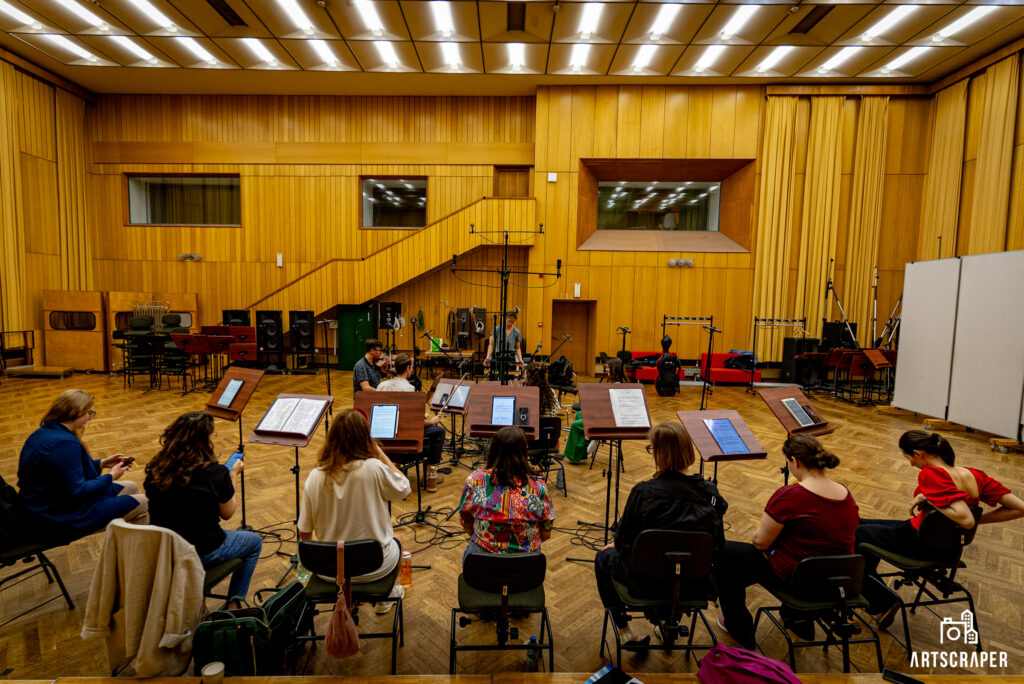
The release of the album (NIE)CÓRKI was co-financed by the Minister of Culture and National Heritage from the Culture Promotion Fund, as part of the ‘Muzyczny ślad’ programme implemented by the National Institute of Music and Dance.
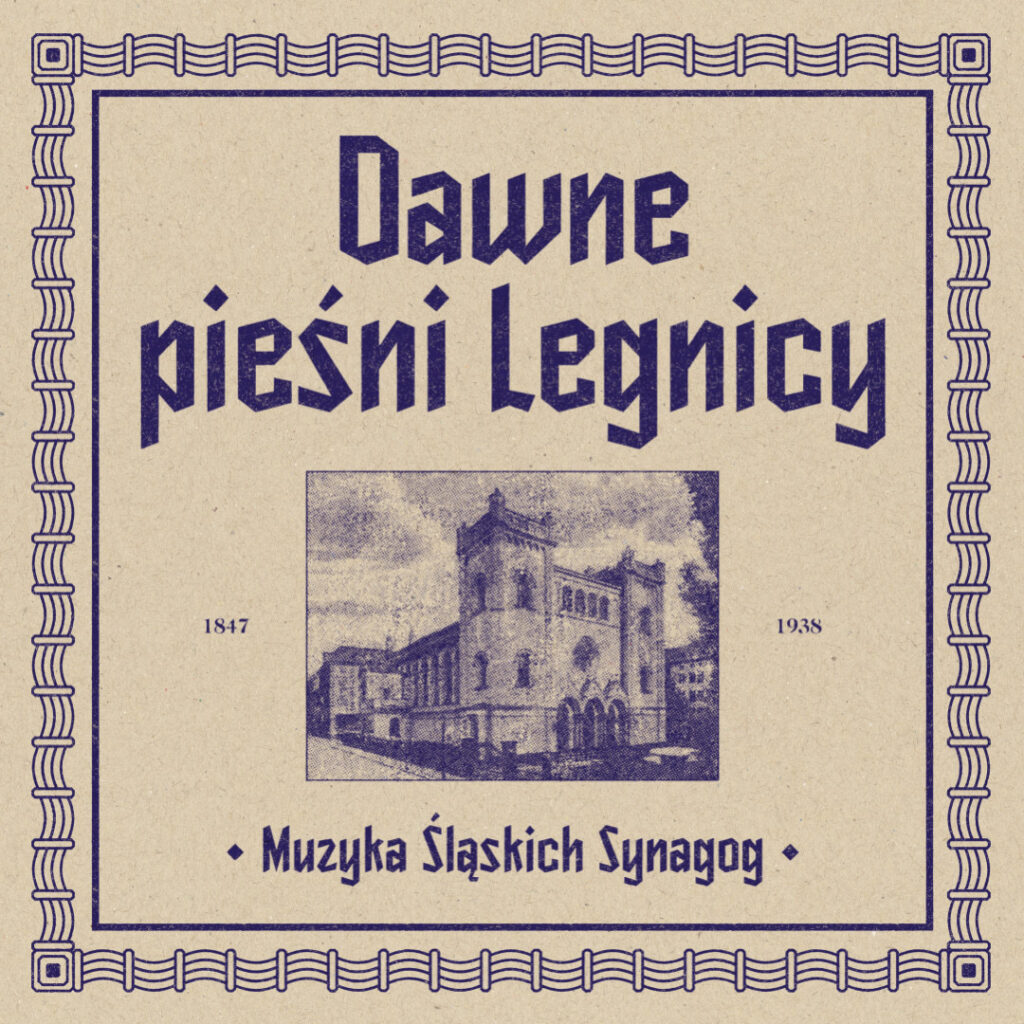
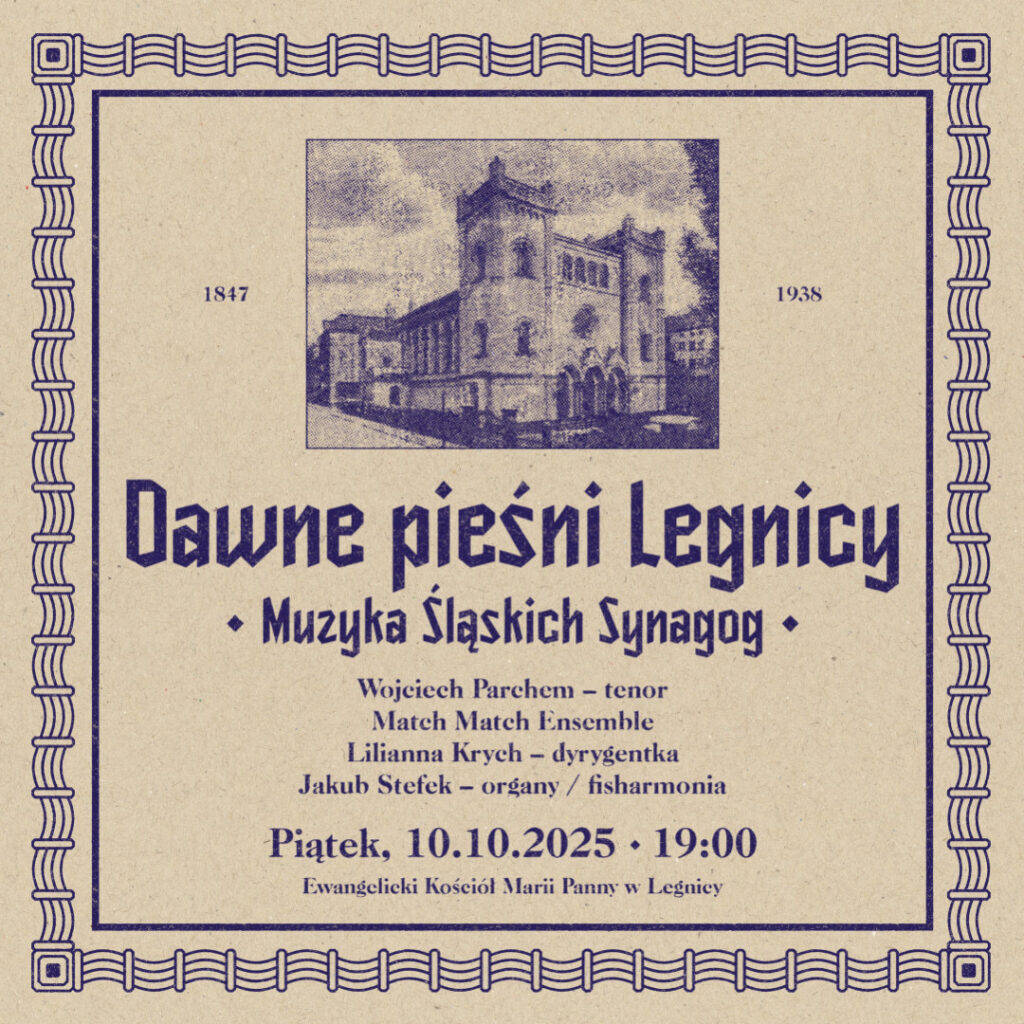
Dawne pieśni Legnicy. Muzyka Śląskich Synagog
10 October 2025
Church of St. Mary the Virgin (Evangelical), Legnica
Our exploration of forgotten synagogue music began with a spectacular program by the outstanding choirmaster of the Great Synagogue on Tłomackie Street. The next step takes us to Silesia, where before the war at least 50 synagogues were active. Today only a few buildings have survived, and none of them serves its original purpose—they function as residential houses (Brzezinka, Byczyna, Głogówek), fire stations (Bieruń), sports halls (Strzelce Opolskie), or parish houses (Mysłowice). Little trace remains of this not-so-distant past. One of the active centers of Jewish culture was Legnica.
After nearly 150 years, the music that once resonated within the walls of the local synagogue returned—liturgical songs accompanying prayer, festivals, and the everyday life of the city’s Jewish community. The event “Ancient Songs of Legnica. Music of the Silesian Synagogues” was a unique evening of remembrance that combined a historical lecture with a cantorial-choral concert, restoring Silesia’s forgotten musical heritage.
The evening opened with a lecture by Dr. Jakub Stefek, organist at the Pestalozzistrasse Synagogue in Berlin, lecturer and researcher of synagogue music, specializing in Jewish music of the 19th and 20th centuries. The talk introduced the history and distinctive features of synagogue music, whose Silesian variant developed in parallel with the reform of Jewish liturgy in Europe. A special focus was placed on Eduard Hamburger—a cantor and composer who published a collection of cantorial chants in Legnica in 1879. After decades of oblivion, his music was heard once again for the first time in the city where it was created.
The concert program presented original compositions by composers associated with Silesian synagogues: Louis Lewandowski (Berlin), Moritz Deutsch (Wrocław), Eduard Hamburger (Legnica), Moritz Tintiner (Bolesławiec), and S. L. Ehrlich (Opole). Their works form a unique synthesis of Jewish spirituality, cantorial tradition, and the forms and harmonies of European Romanticism. In Silesian synagogues, male choirs and organs were employed, and music was not only an element of the liturgy but also an artistic expression of belonging to Europe’s urban culture.
Performers:
Match Match Ensemble
Wojciech Parchem – cantor
Jakub Stefek – organ and harmonium
Lilianna Krych – conductor
The repertoire included both choral works and cantorial songs, reconstructed on the basis of printed sources from the late 19th century.
The event also served as a symbolic prelude to the commemorations of the 70th anniversary of the death of Rabbi Leo Baeck, planned for 2026. Leo Baeck was born in Leszno (Lissa) in 1873 and from 1897 served as rabbi at the newly opened synagogue in Opole. He later became associated with Wrocław, where as a religious leader and intellectual he emerged as one of the most important figures of European Judaism. Baeck was not only a defender of the religious identity and culture of German Jews, but also an outstanding thinker and a witness to the tragedies of the 20th century, which he experienced as a prisoner of Theresienstadt.
The history of Jews in Legnica dates back to the Middle Ages; however, it was in the 19th century—along with the city’s development and changes in legislation—that the community gained the opportunity for free religious, educational, and cultural growth. In 1844, a modern synagogue was built on Chojnowska Street, which for decades served not only as a place of worship but also as a center of musical life. As antisemitism intensified in Germany, the Jewish community of Legnica began to diminish, until it was almost completely destroyed by the Holocaust. The synagogue building was burned during Kristallnacht in 1938 and was never rebuilt.
Dawne pieśni Legnicy. Muzyka Śląskich Synagog is a symbolic gesture of remembrance and the restoration of absent voices. We thank all the residents of Legnica and the region for an evening that brought together history, music, and memory. The city once again heard its ancient songs.
Finale of the AżTak Festival – CREATION, photo: Zuza Balcerzak
5 July 2025
Wanda Czełkowska Studio, 14a Magazynowa Street
The evening concert took us on a musical journey into chapels of art. For the first time in Poland, Morton Feldman’s Rothko Chapel (1971) was performed in a version for solo viola (Aleksandra Demowska-Madejska), celesta (guest: Emilia Sitarz), percussion instruments, and mixed choir (Match Match Ensemble). The inspiration for the piece—and the site of its world premiere—was the titular Rothko Chapel in Texas, a non-denominational chapel housing 14 large canvases by the abstract painter Mark Rothko, a close friend of Feldman. The paintings, in shades of violet, black, and red, are arranged within an octagonal space, and their hues shift depending on the angle of the light. Rothko Chapel reflects not only the calm and solemnity of the painting cycle but also the shimmering play of colors. This unusually short work (just under 30 minutes) stands out among Feldman’s mature compositions, which often last several hours. The meditative piece, built on slowly evolving planes of sound, surprises with the lyricism of the solo viola line and with occasional, almost tonal turns.
During the same concert, we also heard the world premiere of Teoniki Rożynek’s latest composition, Tomba Emanuelle (2025), inspired by the acoustics and atmosphere of the mausoleum of Emanuel Vigeland in Oslo. This mysterious, church-like structure, built by Vigeland in 1926, contains a dynamic, erotic fresco titled Vita, depicting human life from conception to death. The painting covers an area of as much as 800 square meters. After the artist’s death, the chapel of art also became his mausoleum. The atmosphere is heightened by dim light and extraordinary acoustics, and the aura of mystery is further intensified by the fact that the site is open to visitors only on Sundays for four and a half hours. In her composition, Teoniki Rożynek recreates the mystical character of the place and its acoustics through 22-channel electronic processing, scoring for 16 vocal parts and six instruments. The reverberation of the mausoleum becomes the main protagonist of the piece, both metaphorically and literally, as most of the electronic material was created from microsamples of the space’s reverberation.
Program:
Morton Feldman Rothko Chapel*
Teoniki RożynekTomba Emanuelle**
*Polish premiere
**World premiere
Performers:
Hashtag Ensemble:
Aleksandra Demowska-Madejska viola
Magdalena Kordylasińska-Pękala percussion
Emilia Sitarz celesta*
Adam Eljasiński clarinet
Oliwier Andruszczenko clarinet
Dominik Płociński cello
Mateusz Loska double bass
Wojciech Błażejczyk electric guitar
Lilianna Krych conductor
*guest artist
Match Match Ensemble:
Sopranos: Aleksandra Drogosz-Szymańska, Konstancja Molewska, Maria Złotek, Weronika Prasał-Banaszewska
Altos: Małgorzata Bartkowska, Katarzyna Bąk, Ewa Kijewska, Agnieszka Zińczuk
Tenors: Andrzej Klepacki, Paweł Kowalewski, Marcin Kuciński, Jakub Prasał-Banaszewski
Basses: Tymoteusz Cyrkun, Michał Kijewski, Michał Malec, Jacek Rąbiński
Production:
Sound direction: Jan Jędrzejczyk
Production: Katarzyna Stasiewicz
Visual identity: Aleksandra Ołdak
Text: Małgorzata Heinrich, Hashtag Lab
Co-financed by the Minister of Culture and National Heritage from the Culture Promotion Fund—a state special-purpose fund—within the framework of the “Composers’ Commissions” program, implemented by the National Institute of Music and Dance.


Music of David Eisenstadt
THE MUSIC OF DAVID EISENSTADT, CHOIRMASTER OF THE GREAT SYNAGOGUE ON TŁOMACKIE STREET
In 2024, Match Match Ensemble recorded the first-ever monographic album of music by David Eisenstadt, the choir master of the Great Synagogue on Tłomackie Street. On November 17, a concert promoting this album will take place at the POLIN Museum of the History of Polish Jews.
The Great Synagogue on Tłomackie Street in Warsaw was officially opened on the Jewish New Year, Rosh Hashanah, in 1878. It became the most important center of Jewish life in the city and one of the most beautiful buildings constructed in Poland at the end of the 19th century. The synagogue is also noted in history for the music that resonated within its walls. The most prominent cantors of the time served there, and there was also a choir led by distinguished directors, performing to the accompaniment of organs or a fisharmonium. The Great Synagogue on Tłomackie Street was destroyed by the Germans on May 16, 1943, marking a symbolic moment in the crushing of the Warsaw Ghetto Uprising and the leveling of the Jewish district to the ground. Since then, the musical tradition has not returned to this place.
David Eisenstadt, a distinguished musician, composer, arranger, conductor, educator, and music writer, was also the author of a popular Jewish musical encyclopedia. This is how Professor Marian Fuks described him, who in his books not only chronicled the activities of the Great Synagogue Choir under Eisenstadt’s leadership, but also shared his personal memories of their performances.
David Eisenstadt went down in history as one of the most prominent figures in choral music in Poland. The most famous musicians of the time came to hear the virtuosity of his ensemble, both during liturgical services and secular concerts. Privately, Eisenstadt was described as a man of contrasts – emotional, joyful, mysterious, mystical, and non-conformist. When working with the choir, he was reportedly meticulous, paying close attention to breath control, tonal richness, diction, and flawless performances.
As we read about David Eisenstadt and his journey – from small Nasielsk, through Riga, Vilnius, Rostov, and Berlin, to achieving the height of fame in Warsaw – a desire, then a dream, awoke in us to hear his music again. In every book, article, and memory, he was described as the most perfect Jewish artist of pre-war Poland. But where was his music? Nowhere to be found in our country. It seemed that with the destruction of the Warsaw Ghetto by the German forces, and the death of the Eisenstadt family – his daughter at Umschlagplatz, and David and his wife in the Nazi concentration camp at Treblinka – these sounds had disappeared forever.
Yet, after persistent searching through archives on three continents, we once again laid our hands on his scores. We heard once more the liturgical hymns, the perfect recitatives, and even the song “A jak poszedł król na wojnę” (And when the King Went to War), written to the words of Maria Konopnicka, one of Poland’s greatest writers. Today, as these works have returned in the form of the first-ever recording, the memories of David Eisenstadt have not only been fulfilled but also confirmed.
In the 20th century, countless things were destroyed, erased, wiped off the face of the earth. Today, we show that they can still be rebuilt, remembered, and resurrected. As we entered the 21st century, it seemed that something like war would never happen again. Yet, before our eyes, people are dying once more, cities are being destroyed, and heritage is turning to dust. By presenting the music of Eisenstadt, we show that rebirth is possible. For every person who destroys something, there should be one who rebuilds. Destruction, no matter who or what it affects, cannot win. We hope that in the centuries to come, people will remember this.
Recording supervision & sound engineering, editing, mastering
ANTONI GRZYMAŁA, AGNIESZKA SZCZEPAŃCZYK
Graphic design and typesetting
GABRIELA GOLIŃSKA
Content coordinator, author of text
JAKUB STEFEK
Translation
ZOFIA SOCHAŃSKA
Editor
MACIEJ PRZYBYLSKI
Project Manager
KACPER NOWACKI
Production
TOMASZ OLSZEWSKI POLVINYL Sp. z o.o.
© Warsaw Scenic Society WTS-01-2024
Recorded at POLIN Museum of the History of Polish Jews in Warsaw in 2024

Subsidized by the funds from the Ministry of Culture and National Heritage from the Culture Promotion Fund, within the framework of the Musical Footprint programme carried out by the National Institute of Music and Dance

Concert for the Time Change
October 26, 2024
Contemporary Music Space Hashtag Lab
On an October night, when time slows down and we symbolically shift toward winter, we invite you to a comforting reflection on its passage—whether racing or strolling by: hours, minutes, seconds. In October 2024, we participated in a concert themed around the reflection on passing and changing time. The concert was organized in a cozy, soothing atmosphere, with the audience encouraged to listen in a casual setting and comfortable position—lying on carpets, cushions, and poufs.
The program of the Concert for the Time Change (or Changes?) featured two world premieres—pieces commissioned from Aleksander Kościów and Andrzej Karałow, which explore the sound possibilities of a 16-member vocal ensemble, where each voice is a separate part. The Match Match Ensemble performed at this concert alongside the renowned contemporary music ensemble Hashtag Ensemble.
Program:
Andrzej Karałow Luminous Gardens**
Mikołaj Laskowski Deep relaxation
Ewa Trębacz Inana Descending
Aleksander Kościów några dagar på flodstranden**
**world premiere
Performers:
Aleksandra Demowska-Madejska viola
Dominik Płociński cello
Łucja Chyrzyńska* flute
Bartłomiej Sutt* percussion
*PRO Academy Hashtag Ensemble
Match Match Ensemble
Julia Kurzydlak conductor
Wojciech Błażejczyk sound director
Production: Marta Piórkowska
Visual identity: Aleksandra Ołdak
Funded by the Ministry of Culture and National Heritage from the Culture Promotion Fund as part of the “Music” program, implemented by the National Institute of Music and Dance
“Funded by the Ministry of Culture and National Heritage from the Culture Promotion Fund—a state earmarked fund, as part of the ‘Commissioned Compositions’ program, implemented by the National Institute of Music and Dance”
The Contemporary Music Space Hashtag Lab is co-financed by the City of Warsaw. The media patron of the Contemporary Music Space Hashtag Lab is POLMIC.PL

„D’ARC” – A Site-Specific Opera for the 80th Anniversary of the Warsaw Uprising, photo by Pat Mic
In the summer of 2024, Match Match Ensemble participated in the performance D’ARC, based on a concept and directed by Krystian Lada. D’ARC is a contemporary opera set across three time periods and dreams, in which the heroines of this story meet: Joan – a photographer from Paris, the daughter of Polish immigrants; Joanna – a Warsaw-based cellist and also a Resistance fighter during the Uprising; and Giovanna – the French national heroine, the Maid of Orléans. What connects these characters is their readiness to surrender to a vision greater than life itself. In one evening, following the heroines of this story, the audience visited Paris in 2024, Warsaw in 1944, and Rouen in 1429. The audience was guided through a world that was, that is, and that exists only in dreams by: cellist Dobrawa Czocher as Joanna, actress Agnieszka Grochowska as Joan, soprano Gabriela Legun as Giovanna, and baritone Szymon Komasa as the Angel of History.
Match Match Ensemble performed in two scenes: with Joan of Arc in Rouen, portraying roles of Angels and Demons, and in the Rose Garden, where in a symbolic scene dedicated to the memory of the Uprising fighters, they performed Stabat Mater by Roman Padlewski, a composer who perished in the Warsaw Uprising.
The performance, organized for the 80th anniversary of the Warsaw Uprising, is not only a tribute to our ancestors but also a journey through musical and theatrical conventions, in which the creators experiment with form, structure, and space.
The performance was recorded and is available on the free platform Opera Vision:
https://operavision.eu/performance/darc
We invite you to read the review of the performance:
https://domagalasiekultury.pl/2024/08/04/miedzy-mitem-a-obojetnoscia-o-spektaklu-darc-opera-w-rez-krystiana-lady-w-muzeum-powstania-warszawskiego/?fbclid=IwY2xjawGM0KtleHRuA2FlbQIxMQABHehFfE4mrVSzyVYvXewtqWhFDPxAXVXNP8AVXa5FX7oy7PIcMxQ72wkIng_aem_GS83wpmBnJ5NcdrDKFX_KQ
https://e-teatr.pl/pudelko-z-polskoscia-52416
https://e-teatr.pl/darc-joanna-na-bialym-koniu-w-muzeum-powstania-warszawskiego-50339
https://e-teatr.pl/warszawa-jak-powierzchnia-ksiezyca-50534
Creators:
Libretto: Anka Herbut | Łukasz Barys
Music: Dobrawa Czocher | Teoniki Rożynek | Wojciech Błażejczyk | Rafał Ryterski | Julius Eastman | Roman Padlewski
Musical Director, Conductor: Lilianna Krych
Director, Set Designer, Scriptwriter: Krystian Lada
Set Design Collaboration: Łukasz Misztal
Costumes: Natalia Kitamikado
Lighting: Aleksandr Prowaliński
Choreographic Collaboration: Wojciech Grudziński
Assistant Director: Magdalena Milczarska
Production: Warsaw Uprising Museum – Marta Kuźmiak (Production Manager) | Iwa Ostrowska | Beata Spodarek
Performers:
Joan – Agnieszka Grochowska
Joanna – Dobrawa Czocher
Giovanna – Gabriela Legun
Angels of History – Szymon Komasa | Dominik Bobryk | Michał Adam Góral | Wojciech Grudziński
Hashtag Ensemble: Wojciech Błażejczyk (electric guitar) | Aleksandra Demowska-Madejska (viola) | Adam Eljasiński (bass clarinet) | Paweł Janas (accordion) | Krzysztof Kozłowski (synthesizers) | Mateusz Loska (double bass) | Małgorzata Mikulska (bass flute) | Dominik Płociński (cello) | Olga Przybył (drums) | Kamila Wąsik-Janiak (violin)
Match Match Ensemble: Małgorzata Bartkowska (alto) | Ewa Kijewska (alto) | Michał Kijewski (bass) | Andrzej Klepacki (tenor) | Paweł Kowalewski (tenor) | Marzena Lewandowska (alto) | Michał Malec (bass) | Konstancja Molewska (soprano) | Jakub Prasał (tenor) | Daria Sawczuk (soprano) | Adrianna Żołnierczuk-Malec (soprano)
Cellists: Nadia Bojadżijew | Dobrawa Czocher | Katarzyna Drzewiecka | Jadwiga Jaworska | Martyna Kępińska | Urszula Lalek | Joanna Marczyk | Tatiana Przybylska | Katarzyna Stasiewicz | Hanna Szczęsna
The following works are featured in the performance:
Dobrawa Czocher, Opowieść Joanny – Sonata w jednej części na wiolonczelę solo
© Bosworth Music GmbH, Berlin
Julius Eastman, The Holy Presence of Joan d’Arc (version for 10 cellos) oraz Prelude to The Holy Presence of Joan d’Arc arranged by Clarice Jensen. Performances are made with the permission of the publisher G.SCHIRMER INC.
Co-financed by ZAW STOART
Museum Patron: PZU
Strategic Partner: PGE Group

The Great Absence, photo by Marzena Lewandowska
MME’s mission is performing modern music as well as periferal – forgotten, unappreciated, or the kind, that speaks of important social matters. Both of these objectives are combined in the project The Great Absence, which resurrects the history of the Great Synagogue on Tłomackie Street – the largest, grandest and most beautiful Jewish temple of pre-war Poland, blown up on the 16th of May 1943 to mark the defeat of the Warsaw Ghetto uprising. This criminal act was performed by general Stroop himself. The synagogue was never rebuilt after the war, instead, the so called Blue Tower stands in its place today.
The Great Absence aims to bring back the memory of the synagogue’s prosperous times – with its 100 person choir led by David Eisenstadt and where you could hear the organs and harmonium play, gathering both Jewish and non-Jewish communities of Warsaw at its concerts.
The performance in the POLIN Museum consisted of two parts: the first one presenting chosen works from the pre-war synagogue music anthology by Gershon Ephros, which could possibly have been performed in the Great Synagogue on Tłomackie Street, the second – a premiere performance of Lechem We-Afar, a piece written especially for this occasion, by an outstanding composer, Agnieszka Stulgińska.
The project’s initiators were Kajetan Prochyra, the curator of the musical stage of POLIN, and Jakub Stefek, an organist and a researcher of Jewish music.
15.10.2023 / Museum of the History of Polish Jews POLIN / Warsaw / The Great Absence
Lechem We-Afar by Agnieszka Stulgińska
chosen works from the anthology by Gershon Ephros

Opening of the Modern Music Space Hashtag Lab / Warsaw, photo by Marzena Lewandowska
In February 2023 the Match Match Ensemble took part in a concert launching the activity of the Modern Music Hashtag Lab – the first ever freestanding modern music stage in Poland. This extraordinary place – an initiative of the Hashtag Ensemble – gained a status of a Social Cultural Institution of Warsaw. The Hashtag Lab regularly hosts concerts, workshops and meetings, with ensembles like the Poldowski Quartet and the Female Chorus Sirenes rehearsing there regularly as well. We are so happy to be able to create this place together and we highly recommend all the initiatives of the Hashtag Lab! More on: https://hashtaglab.pl

the match girl passion, photo by Marzena Lewandowska
the little match girl passion by David Lang is a piece to which the Match Match Ensemble owes its name and existence. It’s a kind of a secular lithurgy, treating about suffering and compassion, where David Lang combines the tale by Hans Christian Andersen with references to St. Matthew’s Passion by Johann Sebastian Bach.
The performance of the little match girl passion needed a special setting, which was found both in the location (The Warsaw Commune – a social institution in Warsaw) and in its programme. The Radical Polish Orchestra and Homeless Theatre along with the Match Match Ensemble began and ended their performance with two Paragraphs by Cornelius Cardew – this way, the idea of connecting people of different backgrounds, education and income, was fulfilled. Instead of a typical concert, a community ritual was performed.
These concerts had been described, among others, by Michał Tomczak and Urszula Świątek in the Glissando magazine: „The concert in the Warsaw Commune with the music of Cornelius Cardew and David Lang has been one of my favourite experiences of this festival (…).”
18.09-19.09.2022 / The Warsaw Commune Theatre / 65th International Modern Music Festival The Warsaw Autumn
Cornelius Cardew The Great Learning: Paragraph 2
David Lang the little match girl passion to the libretto by David Lang based on texts by H. Ch. Andersen, H. P. Paull, Picander and the Gospel of Matthew
Cornelius Cardew The Great Learning: Paragraph 7